
I told you at the beginning of this episode that it would probably be the most important podcast you’d ever watch. I meant it. And after hearing Talia Smith’s story, I think you’ll understand why.
Talia was 42 years old, healthy, active, and the primary caregiver for her husband, a disabled Marine Corps veteran and quadriplegic. She worked out every day, ate well and took her health seriously because she had to. Her husband depended on her. Then she got a urinary tract infection, something most women have dealt with at least once in their lives, and her doctor prescribed an antibiotic called ciprofloxacin. Talia asked if there was anything she should know before taking it. Her doctor of 10 years told her it was safe and effective, that they used it all the time for UTIs, and that there was nothing to worry about.
Three pills in, Talia’s body began to shut down.
What Happened Next
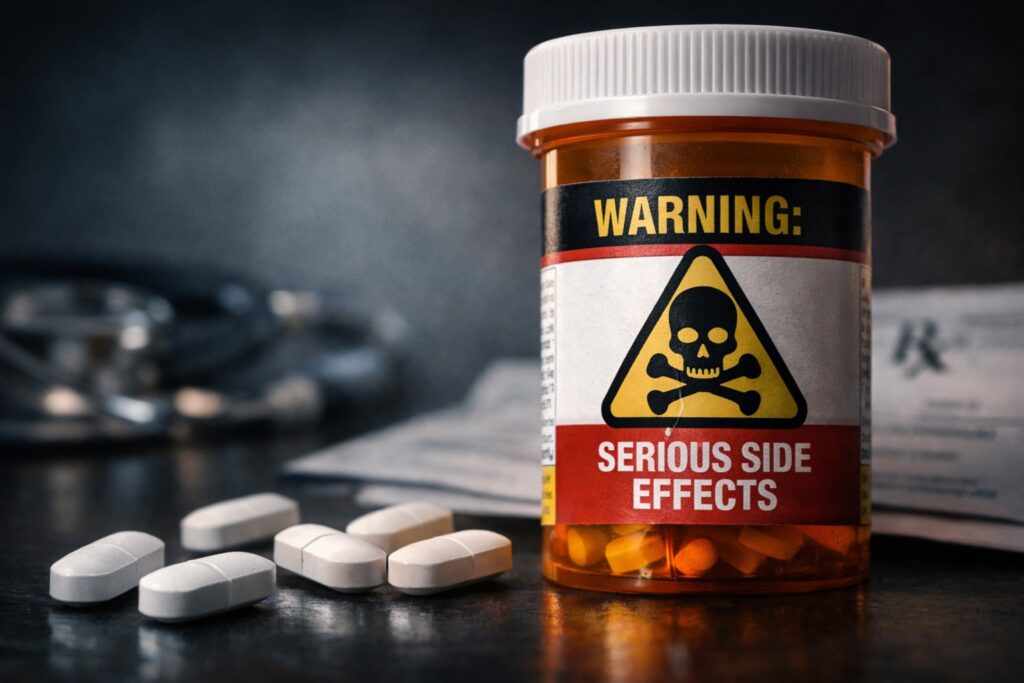
Within hours of her third dose, Talia developed full-body pain, couldn’t put pressure on her heels, started getting electrical zaps in her head and had something moving across her face. By the end of that first day, she was limping. By the next morning, she collapsed getting out of bed. She went to the emergency room, where the doctor took one look at her and asked if she was taking Cipro. He told her about something called a black box warning, the FDA’s most serious label for dangerous medications. Talia had never heard of it. The warning wasn’t on her prescription packaging. Her doctor hadn’t mentioned it.
Over the next five months, Talia’s decline was rapid and devastating. She lost the ability to turn her neck, then the ability to walk. She developed problems swallowing and started choking on her own saliva. She had severe reactions to food and even to water. Her body was shutting down and every time she went to the hospital, the treatments they gave her, including NSAIDs and IV medications, made her worse because they’re contraindicated with fluoroquinolones. The doctors didn’t know that.
She lost over 50% of her body weight. She dropped to 60 pounds. She was placed on hospice. A priest came and read her last rites with her family gathered around her.
How She Survived
Talia’s husband found someone in a Reddit support group who recognized her symptoms as mast cell activation syndrome triggered by the fluoroquinolone. This stranger told him exactly what medications to ask for, including a mast cell stabilizer called cromolyn. The doctors initially resisted, but her husband pushed back. He told them she was going to die anyway, so what was the harm in trying something benign?
Within a week of tiny drops of cromolyn in water, Talia was eating an Ensure pudding. From there, she slowly began to stabilize with the help of functional medicine doctors who believed her and worked with her instead of dismissing her symptoms. Today she is off hospice, though she still requires 24-hour care. She can only eat five foods. She can barely walk, can’t roll over in bed by herself, and lives separately from her husband because of mold damage in their home they can’t yet afford to repair.
She is 46 years old now. And this all started with a routine UTI.
What You Need to Know
Ciprofloxacin belongs to a class of antibiotics called fluoroquinolones. Other names in this class include Levaquin, Avelox and Moxifloxacin. Since 2016, the FDA has stated that fluoroquinolones should only be used as a last resort for uncomplicated UTIs because the risks of permanent and disabling side effects do not outweigh the benefits. That warning has been in place for nearly a decade, and doctors are still prescribing these drugs as a first-line treatment for common infections.
Fluoroquinolones carry seven black box warnings and have more reported adverse reactions than any other drug on the market. The reactions can appear immediately or show up months later, which means many people never connect their symptoms to the antibiotic they took. They get diagnosed with fibromyalgia, chronic fatigue or other conditions, never realizing the fluoroquinolone was the trigger. And NSAIDs, which are commonly prescribed for pain and inflammation, make the damage worse.
These antibiotics come in pill form, IV, injectables, eye drops and ear drops. Talia has documented cases of people who were severely harmed by a single ear drop or a single eye drop. The mechanism of action is the same regardless of how it enters your body.
What You Can Do
When your doctor prescribes an antibiotic, ask what class it belongs to. If it’s a fluoroquinolone, ask for an alternative. There is almost always one available. Request a urinalysis and culture before accepting any antibiotic so your doctor can determine exactly which medication your specific infection will respond to, rather than prescribing broadly.
If you’re ever in a hospital, you have the right to ask what’s being put into your IV and the right to refuse any medication. Talia now wears a medical bracelet listing every medication she cannot take and carries documentation with her in case she’s ever unconscious.
And if you or someone you love has experienced a reaction to a fluoroquinolone, report it to MedWatch. The more reports the FDA receives, the harder it becomes for anyone to ignore the scope of this problem.
Why I’m Sharing This
I sat across from Talia during this interview in complete shock. I’ve had many guests on this podcast, but this conversation was different. This is a young woman who did everything right. She ate well, exercised, took care of her family and trusted her doctor. And one routine prescription nearly killed her.
I’m sharing her story because I believe you deserve to know what’s in the medications you’re being prescribed. You deserve to ask questions and receive honest answers. And you deserve to know that when the FDA puts a black box warning on a drug, it means something serious enough that your doctor should be telling you about it before you take the first pill.
Talia has become one of the loudest voices in the fluoroquinolone awareness community. Her social media videos have reached millions of people, and the FDA has contacted her directly because of her advocacy. You can find her at thisisfloxxed.com and on all social media platforms.
Please watch the full episode. Please share it with someone you care about. This is information that could save a life, and that is not an exaggeration.