A Herbalist’s Approach
Natural remedies for menopause mood swings work best when herbs and daily habits are doing the work together. That’s the takeaway from my latest podcast conversation with Brenda Grate, my resident herbalist at The Aging Games. The herbs absolutely help, and Brenda has the formula to prove it, but the women who turn the corner on menopause for good are the ones who change how they live alongside what they take.
Here’s what came out of our conversation, and what I want every woman over fifty to know.
The herbal tincture that helps with menopause mood swings
Brenda is one of those women who sailed through her menstruating years with no PMS. Heavy cycles, but no emotional rollercoaster. Then perimenopause arrived and the steadiness she had taken for granted disappeared. The hot flashes she could handle with a little mother wort tincture. The mood was something else entirely. She told me she’d look in the mirror and think, “I don’t even like who I am right now.”
Around that time she was in herbal training and found a recipe in her textbook from a professor who had been using it with menopausal women for over thirty years. Five herbs together:
- Dong quai
- Black cohosh
- Blue cohosh
- Cramp bark
- Blessed thistle
She made the tincture and felt like herself again within days. She started calling it her happy juice, and the name stuck. She has since seen it work for other women too, including one client with severe fibroids and no sex drive who came back two months later with a very different report card on her marriage.
These aren’t fringe herbs. Black cohosh and dong quai have been used for centuries in menopause support, and modern herbal practitioners still rely on this kind of multi-herb formula because the synergy is what makes it work. Black cohosh alone won’t do what the five herbs do together.
A note before you go searching: tinctures are strong medicine, and the dosing matters. If you want to try a formula like this, work with a qualified herbalist rather than buying random bottles off a shelf.
Why the herbs alone aren’t the whole story
Here’s the part of the conversation that I keep coming back to.
Brenda is still in menopause. She still has a body recalibrating itself. And she doesn’t need her happy juice anymore, because she changed how she lives.
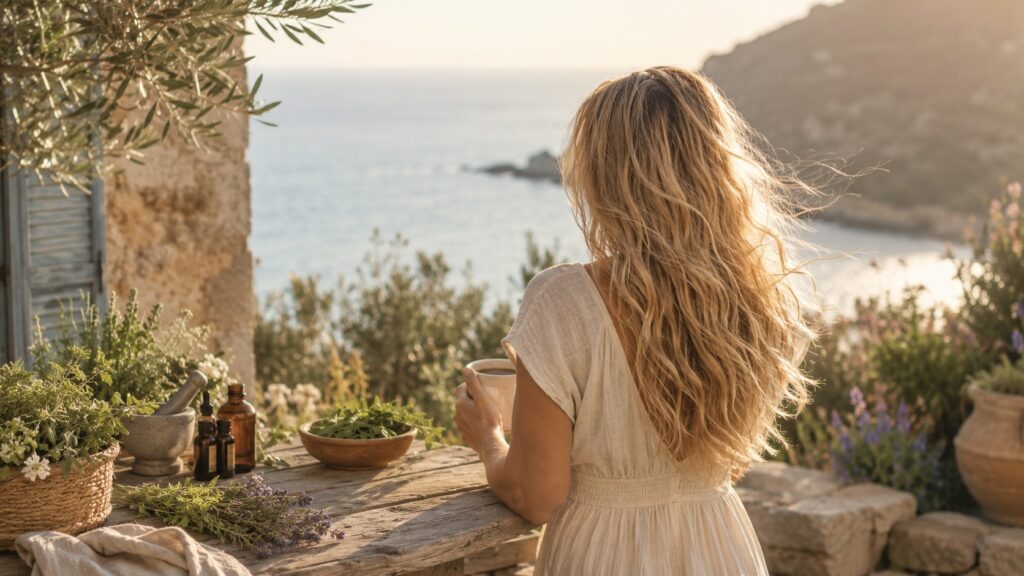
She moved to Greece, where she gets morning sun every day, eats what her husband Chad calls one-ingredient food, moves her body, sleeps when she’s tired, and has finally put down the stress she had been carrying for years.
The herbs corrected her imbalance. The lifestyle keeps her in balance.
This is what I have been saying on this podcast for years, and it carries more weight coming from a working herbalist. The plants can do extraordinary things. They will absolutely help you through a rough patch. But no tincture will outwork a bad lifestyle. You can keep correcting the same imbalance over and over, or you can change the conditions that created it.
What works for menopause mood swings (the foundation)
If you want a working list of what actually moves the needle on menopausal mood swings, here it is. None of this is glamorous. All of it is what the women I hear from credit when the symptoms ease, and what Brenda sees with her clients too.
- Morning sunlight. Ten to twenty minutes of natural light in your eyes within an hour of waking. This resets cortisol and supports melatonin production for better sleep that night.
- Real food. Whole, single-ingredient foods. Plenty of protein. Healthy fats. Vegetables. Limit processed food, seed oils, and sugar.
- Daily movement. Walking counts. Strength training matters more after fifty than at any other point in your life.
- Sleep. Go to bed when your body asks. Cool, dark room. Off the phone at least an hour before.
- Stress work. The unspoken things, the resentments, the held-in grief. They sit in the body and they wreak havoc during menopause.
- The right herbs at the right time. Not every woman needs the same formula. A consultation with a herbalist is worth more than any supplement bottle.
When menopause symptoms aren’t really menopause
Brenda told me about a client she’s working with right now who came in with a few complaints: brain fog, weight that wouldn’t budge, rosacea, and sugar cravings. Brenda suspected candida and ran a second consultation with a questionnaire. The client scored very high. They started a candida protocol before anything else. Twenty-three days in, the cravings were gone, the rosacea cleared, and the client said she began craving protein and fat instead of carbs and sugar.
The lesson: if your gut is inflamed, your liver is overworked, or you have a yeast overgrowth running in the background, your menopause symptoms will feel worse than they actually are. Address the underlying issue and many other issues will often clear up as well.
This is why a real consultation with a herbalist or naturopath matters. A good practitioner doesn’t just look at the symptom in front of you. They look at the whole picture, including blood type, ancestry, reproductive history, sleep, stress, and what’s actually going on inside the gut. If you want to work with Brenda directly, you can find her at Mugwort and Meadow, where she offers consultations both locally in Greece and worldwide video calls.
Frequently asked questions about natural menopause support
What is the best natural remedy for menopause mood swings?
There isn’t one. The best results come from combining a herbal formula like the five-herb tincture mentioned above with foundational lifestyle work: morning sunlight, real food, daily movement, quality sleep, and stress reduction. Herbs correct imbalance. Lifestyle keeps you in balance.
Are herbs safe to take during menopause?
Most herbs are safe when used correctly, but tinctures and concentrated extracts can interact with medications and conditions. Black cohosh, for example, can affect the liver in rare cases. Dong quai can thin the blood. Work with a qualified herbalist, especially if you take prescription medications or have a thyroid condition.
How long do menopause mood swings last?
For most women, mood swings settle within a few years of the final menstrual period, often sooner with proper support. Persistent mood symptoms past that point usually point to something else: candida, thyroid imbalance, nutrient deficiency, gut inflammation, or unaddressed stress. None of those go away on their own.
Can you reverse menopause symptoms naturally?
You can’t reverse menopause itself, but you can reduce or eliminate most symptoms with the right combination of herbal support, nutrition, sunlight, sleep, and stress management. Many women feel better in menopause than they did in their forties once the foundations are in place.
Do I need to see a herbalist or can I treat myself?
For mild symptoms, foundational lifestyle changes and gentle herbs like mother wort or chamomile are reasonable to start on your own. For persistent mood swings, severe hot flashes, sleep disruption, or any complicating health condition, a consultation with a herbalist is worth the investment. Concentrated tinctures are real medicine and deserve professional guidance.
The takeaway
If you’re struggling right now, please hear this. The mood swings are real. The hot flashes are real. The brain fog and the joint pain and the sleep disruption are all real, and you’re not making any of it up. Herbs can help. A good herbalist can help even more. Lifestyle will carry you the rest of the way.
You don’t need to do all of it perfectly tomorrow. Start with one piece, then add another the following week, and keep building from there. Your body will meet you halfway.
If you want the full framework for handling menopause naturally, my book Natural Menopause walks you through everything I’ve learned over the past thirty years, from hormones and herbs to nutrition, sleep, and the daily habits that change the game. It’s the book I wish someone had handed me when my own symptoms started.
The full conversation with Brenda Grate is up on The Aging Games podcast now. We get into urtication, plant relationships, her thyroid story, and a lot more.