I was 21 when I cashed in my retirement savings to pay for my first set of breast implants. I still wince when I hear myself say that out loud. I made the choice because I had been told my body was not enough as it was, and I believed it without question. What I did not understand then, and what almost no woman is told before she signs the consent form, is that those implants would set me on a long road toward breast implant illness.
What happened next is a story I am still telling pieces of, more than thirty years later. Some of it I shared on a recent episode of The Aging Games Podcast with Dr. Sande Bargeron, who came back on to talk about something both of us have lived through. We sat down to talk honestly about breast implant illness, explant surgery, and the years of unexplained symptoms both of us ignored because no one ever connected the dots for us. We also talked about what recovery looks like once you finally take them out.
This conversation was not easy to record. It is also one of the most important I have ever had on the show.
Why Two Educated Women Both Ended Up With Breast Implant Illness
Dr. Sande is a physician assistant with a PhD in natural medicine. She has been practicing medicine for decades. She got her implants in her twenties, just after PA school, because a friend in plastic surgery offered her a deal and she had always felt self-conscious about being flat-chested. Two intelligent, capable women, both of us trained to question what we put into our bodies, and both of us ended up with the same outcome.
We talk on the episode about why so many women make this choice and why no one is being honest with us about what we are signing up for. We were not told that 60 percent of implants rupture within five years across every brand, saline or silicone. We were not told that the FDA recommends a breast integrity MRI every five to six years to check for rupture, that it costs around a thousand dollars out of pocket, and that almost no woman with implants has ever been informed of this. We were not told what happens to your body when silicone leaks into your tissue and travels through it.
The information exists. It is not hidden. It is just not given to you before you sign the consent form.
The Breast Implant Illness Symptoms Almost No One Connects
Dr. Sande describes losing an entire year of her life to brain fog so severe she cannot remember details from it now. The weight piled on and would not come off. Inflammation made her puffy. Her hair started falling out. Anxiety came out of nowhere. Every symptom arrived slowly, then all at once, and every doctor she saw treated each piece as something separate.
She found her answer at a medical conference, of all places, when another PA stood up to talk about breast implant illness. Dr. Sande sat there and recognized herself in every word.
That is part of what makes this conversation so important to me. Most women with implants will never sit in a room where someone names what is happening to them. They will keep cycling through doctors and supplements and elimination diets, getting told their bloodwork looks fine, while the actual source of the inflammation sits silently inside their chest.
What Explant Surgery Recovery Looks Like
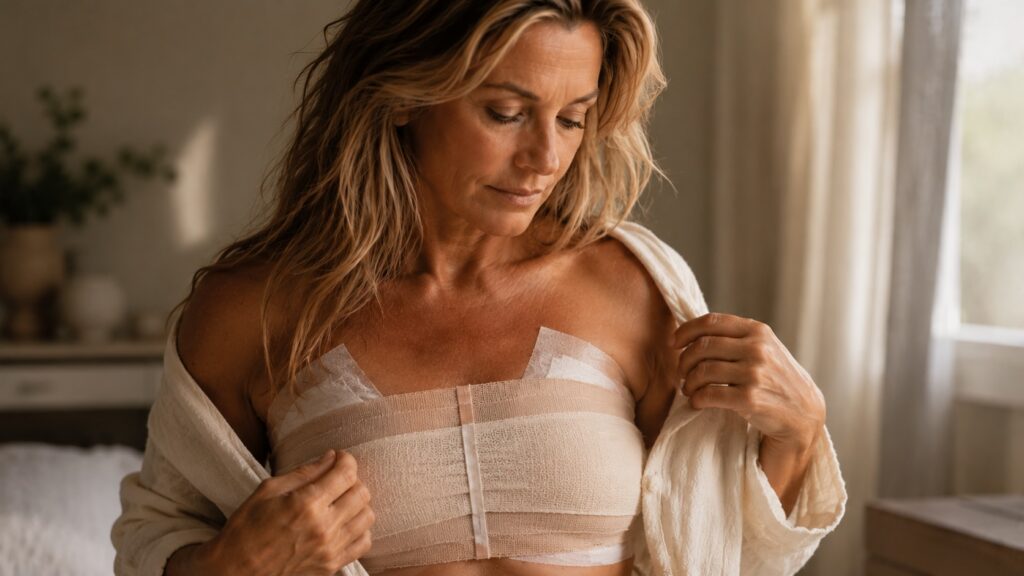
Dr. Sande’s recovery is something every woman with implants should hear about. She woke up from explant surgery and felt her brain firing differently before she was even fully out of sedation. Her thoughts became clear again, her personality returned, and her weight slowly started coming down. Her hair stopped falling out. Her skin and hot flashes both improved. The change in her was not subtle, and it did not take long to show up.
I have lived a version of this story too. I had my implants removed years ago and replaced with a fat transfer using my own tissue, which I talk about on the episode in more detail. The decision was hard. The recovery was harder. The outcome was worth every difficult moment of getting there.
What I Could Not Bring Myself to Share in Detail
There are parts of my own implant story I held back even on the podcast, and parts I shared that still feel raw to talk about. The first surgery at 21 was done under local anesthetic by a single doctor with only his secretary in the room. I will leave that piece there for now, and if you want to hear the rest of what happened on that table and what came after with the second surgery years later, it is all on the episode.
There is a reason I am sharing as much as I am here. Women keep getting implants because the stories of what truly happens to so many of us are kept quiet. We are told the risks are minor and the recovery is easy and the outcome is beautiful. For some women that is true. For a great many of us it is not, and we deserve to hear from the women who lived it before we decide.
The Question Dr. Sande Wants You to Sit With
Toward the end of our conversation, I asked Dr. Sande what she would say to a woman watching who is on the fence about getting her implants out. She said you are the CEO of your own health. A CEO does not run a company without looking at the ledgers. If your body is telling you something is wrong, that instinct is almost always right. Do the inner work of accepting the choices you made when you did not know better. Then make the choice that gives you your health back.
Why I Want You to Listen to This One
If you have implants and you have been wondering whether they are connected to what you have been feeling, this episode is for you. If you are considering getting them, this episode is for you too. If you have a daughter, a sister, a friend who is thinking about it, please send this to her before she walks into that consultation.
The full conversation with Dr. Sande Bargeron is up now on The Aging Games Podcast. We get into the symptoms, the recovery, saline versus silicone, what happens when implants rupture, the explant procedure itself, and detox strategies for after removal. It is honest, sometimes hard to hear, and full of the information neither of us was given when we needed it.
If you find it useful, please subscribe and share it with a woman who needs to hear it. That is how this information finally reaches the women who have been looking for it for years.