
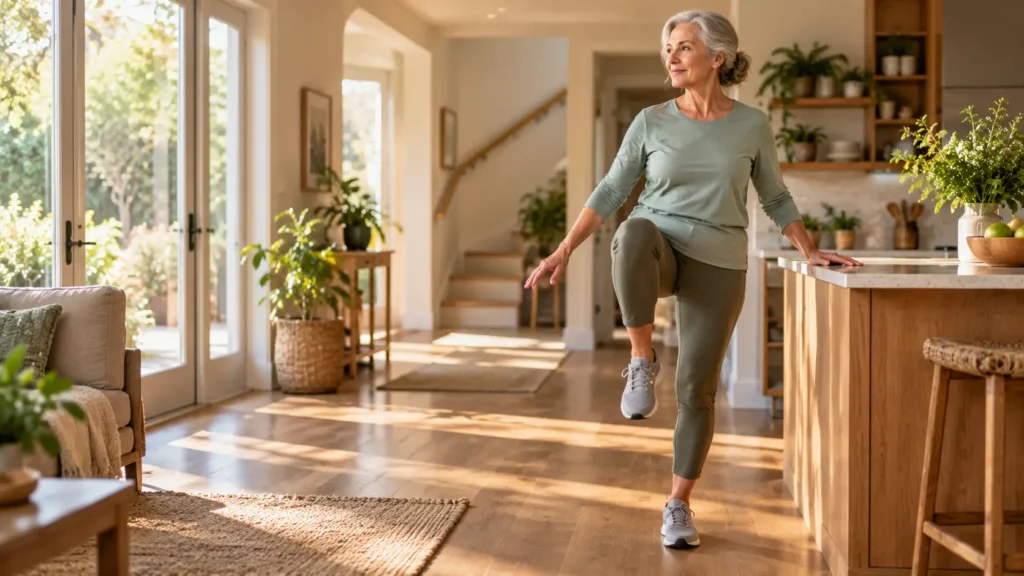
Falls are one of the biggest concerns associated with aging, but growing older does not mean losing your strength, confidence, or independence. With the right approach to exercise, balance training, and home safety, older adults can take meaningful steps to reduce their risk of falling and maintain their ability to do the things they love.
In a conversation on the Aging Games podcast, occupational therapist Catherine Gough shares practical insights into why falls happen, which exercises can help prevent them, and how seemingly small changes can make everyday life safer. From strength training and balance exercises to medication awareness, vision checks, and preparing for emergencies, her advice offers a valuable starting point for older adults and their families.
The central message is simple: staying active is one of the most important ways to support mobility, confidence, and independence as we age.
Why Are Older Adults More Likely to Fall?
Falls rarely have just one cause. They can result from a combination of physical changes, environmental hazards, health conditions, and difficulties with balance or coordination.
As we age, we may gradually lose muscle strength and power. Our balance can become less reliable, and proprioception—the body’s ability to sense its position and movement—may decline. These changes can make everyday activities, such as standing up from a chair, navigating stairs, or recovering from a stumble, more challenging.
Posture also matters. A pronounced forward lean can shift the body’s center of balance and contribute to instability.
Cognitive conditions, including dementia, can introduce additional challenges. Difficulties with concentration, memory, information processing, and judgment may affect how someone moves around their environment. A person may also struggle to remember instructions or use a walking aid correctly.
Mobility aids can be helpful, but they must be appropriate for the individual and used safely. For someone who has difficulty learning new routines, an aid that is not properly understood can sometimes become another obstacle.
Other factors deserve attention, too. Vision problems can affect balance and awareness of surroundings, while medications and underlying health conditions may contribute to fall risk. A comprehensive approach considers the whole person rather than focusing on strength alone.
Strength Training: A Foundation for Fall Prevention
Catherine emphasizes exercise as one of the most important interventions for reducing falls and supporting healthy aging. Strength training, in particular, helps preserve the physical abilities people rely on every day.
Think about the movements involved in getting out of bed, rising from the toilet, carrying groceries, or standing up from a low chair. These activities require strength that can gradually diminish when muscles are not challenged regularly.
Maintaining strength also helps people recover when something goes wrong. If you trip or lose your balance, your body needs enough power to take a quick corrective step. Strength and power can also help you get back up after a fall, provided you have not sustained an injury that makes movement unsafe.
Exercise offers benefits beyond physical ability. Feeling stronger can improve confidence and encourage older adults to remain active rather than withdrawing from activities because they fear falling.
Is It Too Late to Start Exercising?
Absolutely not. Although building strength earlier in life is beneficial, older adults can still make meaningful progress when they begin exercising later.
The important thing is to start at an appropriate level and build gradually. Someone who has been inactive for years does not need to begin with heavy weights or complicated gym routines.
Catherine works with clients in their own homes, using everyday objects and movements to build functional strength. A qualified occupational therapist, physiotherapist, or appropriately trained exercise professional can help tailor activities to an individual’s abilities and needs.
The goal is not to compete with younger people. It is to maintain the strength and mobility required for your own life.
Balance Training Deserves More Attention
Strength training is essential for independence, but balance training plays a particularly important role in fall prevention. According to Catherine, balance exercises are often neglected even though they directly challenge the skills needed to remain steady while moving.
Balance improves when it is challenged progressively, much like strength. Exercises should be difficult enough to encourage adaptation without placing the person at unnecessary risk.
Examples include:
- Single-leg stands: Practice balancing on one foot while standing near a sturdy support.
- Tandem walking: Walk with the heel of one foot close to the toes of the other, as if following a tightrope.
- Side-stepping: Move sideways around suitable obstacles or along a clear, safe path.
- Backward walking: Practice controlled backward steps when it is safe and appropriate.
- Step-ups: Use a suitable step to challenge leg strength and coordination.
- Tai Chi: Consider a class that includes standing movements and appropriately challenging balance activities.
The right exercises depend on the person’s current abilities. Standing on one leg may be manageable for one individual but extremely difficult for another.
Catherine discusses research supporting substantial, regular balance practice, alongside strength work, for fall prevention. The exact amount and difficulty should be adapted to the individual, especially when there is a history of falls or significant mobility impairment.
One important precaution: balance exercises should not be attempted in situations where a loss of balance could lead to a serious injury. People who are particularly unsteady should seek professional guidance to establish a safe starting point.
Make Your Home Safer Without Giving Up Independence
The home should support movement, not make it unnecessarily difficult.
One of the simplest steps is to remove or reduce tripping hazards. Loose rugs, clutter, newspapers, magazines, and objects left on the floor can obstruct walking routes. Clear the areas you use most frequently and make sure there is enough space to move comfortably.
Lighting is another important consideration. Poor visibility can make it harder to identify obstacles, particularly when getting up during the night. Keep pathways well lit and plan safe access to the bathroom.
Grab rails and handrails can provide additional support in places where balance is more difficult, including bathrooms, showers, and stairs. Their placement should reflect the person’s individual needs and the layout of the home.
However, home adaptations should complement efforts to maintain physical ability. If someone begins struggling to rise from a chair or climb stairs, that difficulty may be a useful signal to assess strength and balance. Appropriate exercise may help preserve those abilities, while necessary adaptations can make movement safer in the meantime.
The aim is not to eliminate every challenge from the home. It is to make everyday movement as safe and manageable as possible.
Practice Getting Down to the Floor and Back Up
One of Catherine’s most practical recommendations is to continue practicing getting down to the floor and standing up again for as long as it remains safe and appropriate.
This movement combines several abilities, including strength, flexibility, mobility, and balance. It also rehearses a skill that can become especially important if a fall occurs.
For people who can do so safely, activities such as playing with grandchildren on the floor or practicing controlled transitions between standing and sitting can help maintain functional mobility.
However, floor exercises are not suitable for everyone. Anyone with significant balance problems, pain, a recent injury, or difficulty getting up independently should seek professional advice before attempting them.
Why Having a Plan After a Fall Matters
Even with preventive measures, falls can still happen. If someone cannot get up after falling, remaining on the floor for an extended period can lead to additional complications, including dehydration, skin damage, pressure injuries, and worsening weakness.
That is why prevention should include an emergency plan.
Consider whether the person can reach a phone, use a wearable emergency alert, or call for assistance through a device they already know how to operate. A simple, familiar system may be more useful than complicated technology that becomes difficult to use during a stressful event.
Family members should discuss this plan in advance. Knowing whom to call and how to summon help can make a frightening situation easier to manage.
Support Bone Health to Reduce the Consequences of Falls
Falls can result in serious injuries, including hip fractures. These injuries can cause considerable pain, reduce mobility, and affect a person’s ability to live independently.
Bone health is therefore an important part of the wider conversation about fall prevention. Catherine highlights weight-bearing exercise, strength training, and activities that place appropriate demands on the bones as ways to support musculoskeletal health.
Walking is a useful starting point for people who can manage it, but it may not provide all the challenges needed to develop strength and power. Resistance exercises can help maintain muscle, while suitable impact-based activities may also support bone health.
The key word is suitable. Jumping, skipping, and other high-impact movements are not appropriate for everyone, particularly people with osteoporosis, previous fractures, or significant balance difficulties. A healthcare professional can help determine which activities are safe.
Nutrition also matters. Catherine highlights calcium and vitamin D as relevant considerations for bone health. People concerned about osteoporosis or fracture risk should discuss appropriate assessment and prevention strategies with their healthcare professional.
Rebuild Confidence After a Fall
A fall can affect more than the body. It can make someone afraid to leave the house, walk to nearby shops, or resume familiar activities.
Unfortunately, avoiding movement altogether can contribute to further loss of strength and confidence. The solution is not to push through fear recklessly, but to rebuild ability gradually.
Catherine recommends setting realistic, achievable goals. For someone who has become anxious about going outdoors, the first step might simply be walking to the garden gate and back. Once that feels manageable, the goal can progress in small increments.
Each successful step offers an opportunity to rebuild confidence. The challenge should be meaningful without being overwhelming.
Where possible, support from an occupational therapist, physiotherapist, or qualified exercise professional can help people identify appropriate exercises and work through their concerns. Family members can help by encouraging progress without pushing too hard.
Practical Exercises You Can Do at Home
You do not necessarily need a gym membership to work on strength and balance. Depending on your abilities, simple household activities can provide a starting point.
Options discussed by Catherine include:
- Sit-to-stands: Practice rising from a sturdy chair and sitting back down with control.
- Squats: Build lower-body strength using a comfortable, appropriate range of movement.
- Step-ups: Use a suitable step to challenge the legs and coordination.
- Lunges: Try shallow, controlled variations if appropriate for your balance and mobility.
- Arm exercises: Use suitable household items for movements such as biceps curls, shoulder presses, and rows.
- Balance practice: Work on supported single-leg stands, tandem walking, or side-stepping at a level you can manage safely.
Household objects can sometimes serve as exercise equipment, but improvised weights must be stable and easy to grip. Stairs, backward walking, and unsupported balance drills can pose additional risks, so they should only be attempted when the environment and the person’s abilities make them safe.
If you have already fallen, feel unsteady, have a medical condition affecting movement, or are unsure where to begin, seek individualized advice before starting a new exercise routine.
Take Action Before a Fall Happens
Fall prevention is not about accepting frailty as an inevitable part of aging. It is about recognizing what helps people remain capable, confident, and independent.
Regular strength and balance training, appropriate vision care, attention to medications, a safer home environment, and a clear emergency plan all have a role to play. Small, consistent actions can help older adults preserve the abilities that make everyday life possible.
As Catherine Gough’s conversation on the Aging Games podcast reinforces, it is never too late to start paying attention to strength and mobility. Whether you are thinking about your own future or supporting an older parent or loved one, the most valuable step is to begin with what is safe and achievable today.
Stay active, challenge your abilities appropriately, and make independence a priority before a fall forces the conversation.
Follow Catherine here: https://www.instagram.com/livesteadyoccupationaltherapy/
Learn more about her work: https://www.qualitylifeenablement.co.uk/